
What CNC machining costs, and what moves the price
Last updated
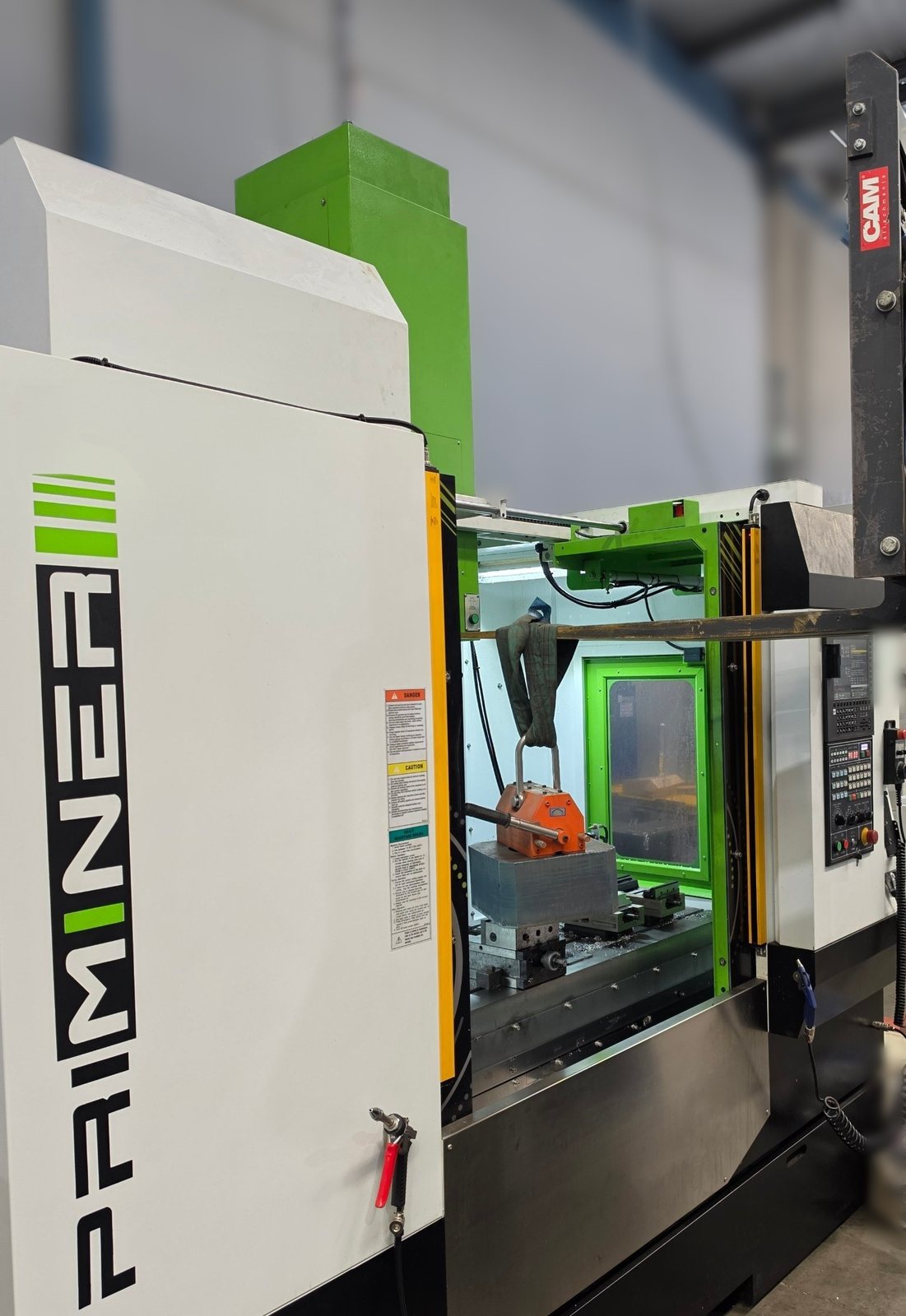
There is no instant price for a machined part the way there is for a laser cut one, because every machined part is a different sequence of setups, tools and cuts. What we can do is tell you exactly what moves the price, so you can see where your drawing is spending money before you send it. Quoting is free and a machined part is usually quoted within 24 hours.
Six things set the price
Material. The grade sets both the cost of the blank and how fast it can be cut. Aluminium machines quickly; 316 stainless, tool steel and titanium machine slowly and wear tools. Swapping a free machining grade in place of a tough alloy, or aluminium in place of stainless where corrosion is not a factor, can cut machining time substantially. We review this as part of quoting and will only suggest a change where the part still meets its duty.
Quantity. Programming, fixturing and first off inspection cost the same for one part as for a hundred, so the unit price of a batch is a fraction of the unit price of a prototype. There is no minimum order and single parts are everyday work, but the quote shows the setup clearly so you can see what a repeat batch would cost.
Complexity. Every face that has to be machined is a setup, and every setup is time. A part machined from two sides costs less than the same part machined from five. Deep narrow pockets, internal corners smaller than any available tool, and thin walls all add time or scrap, which is why they are the first things flagged in a design for manufacture review.
Tolerance. We routinely hold 0.01 mm on critical features and 0.05 mm to 0.1 mm on general milling and turning. Holding the tight figure everywhere costs more than holding it only where the part needs it, so call out the critical dimensions on the drawing and leave the rest to a general tolerance. We inspect to the critical dimensions specifically.
Finish. A machined finish is the cheapest finish. Anodising, plating and powder coating are arranged with finishers we have used for years and added to the same purchase order, and they show as a line on the quote rather than a surprise later. Material certificates and detailed inspection reports are available on request for critical jobs.
Setup and the drawing. A STEP file plus a dimensioned drawing showing the critical features is the fastest combination to quote and the cheapest to make, because nothing has to be guessed. A PDF alone can be quoted but may need questions first. Where a design has to be created or reverse engineered from a sample, that is quoted as a separate one off fee.
What a quote from us looks like
Straightforward machined parts are usually quoted within 24 hours. Complex assemblies with bought in items and finishing can take up to five days, because we price the whole job rather than guess at the parts we have not seen. Up to about five parts takes two to three weeks to make; fifty to one hundred parts four to six weeks; five hundred or more six to seven weeks. Every quote confirms the lead time in writing.
If a drawing is unclear we call before quoting rather than guess. If you are flexible on material or finish, say so, because it often reduces the price.
How to send a part that is cheap to make
- Send a STEP file and a drawing with the critical dimensions called out.
- Put a general tolerance on the drawing and tight tolerances only on the features that need them.
- Keep internal corner radii at or above a standard cutter size.
- Avoid pockets deeper than about three times their width where you can.
- Tell us the quantity you will actually order, and whether it repeats.
- Say what the part does, so we can suggest a cheaper grade that still meets the duty.
Frequently asked questions
How much does CNC machining cost per hour?
We quote per part, not per hour, because the hourly rate is the smallest part of the answer. The quantity, the material, the number of setups and the tolerances decide the price. Send the drawing and the quote is free.
Why does one prototype cost so much more per part than a batch?
Programming, fixturing and first off inspection are the same work whether one part follows or a hundred. In a batch that cost is spread; in a prototype it is all on one part.
Is tighter tolerance always more expensive?
Yes, where it is not needed. Holding 0.01 mm on a critical bore is normal work. Holding it on every face of the part is paid for on every face. Call out the critical dimensions and leave the rest to a general tolerance.
Can you help lower the cost of an existing part?
Yes. Material substitution and design for manufacture review are part of quoting. A design for manufacture review is quoted separately rather than included free, and it usually pays for itself on a repeat part.
Do you charge for quoting?
No. Quoting is free and there is no obligation to proceed.