
Sheet metal thickness: gauges, millimetres and what it does to the price
Last updated
Thickness is the first thing we ask about a sheet metal job and the thing that moves the price most. This guide is for the person specifying a bracket, a guard or an enclosure who wants to pick a thickness that does the job without paying for metal it does not need.
Gauge or millimetres?
Australia works in millimetres. Gauge numbers still turn up on old drawings and imported parts, and they are not the same for steel, stainless and aluminium, which is why we ask for millimetres on every enquiry. The table below gives the common conversions; if a drawing says 16 gauge, confirm which metal it means before anyone cuts anything.
| Gauge | Steel | Stainless | Aluminium |
|---|---|---|---|
| 10 | 3.4 mm | 3.6 mm | 2.6 mm |
| 12 | 2.7 mm | 2.8 mm | 2.1 mm |
| 14 | 1.9 mm | 2.0 mm | 1.6 mm |
| 16 | 1.5 mm | 1.6 mm | 1.3 mm |
| 18 | 1.2 mm | 1.3 mm | 1.0 mm |
| 20 | 0.9 mm | 1.0 mm | 0.8 mm |
What we cut and fold in Smithfield
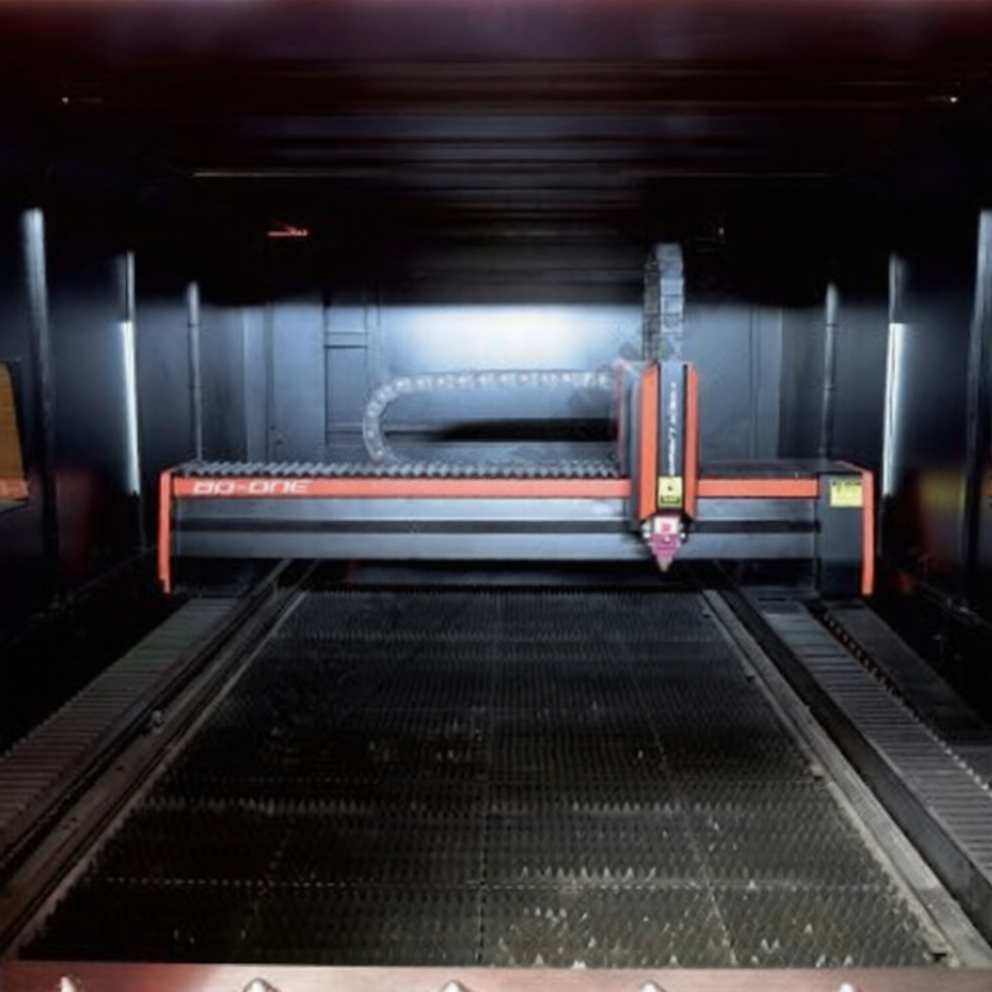
Our 6 kW Bystronic DNE fibre laser cuts mild steel to 16 mm and stainless steel and aluminium to 8 mm, with thicker plate sourced for the customer. Most of our sheet work runs in mild steel from 1.2 mm to 6 mm, in 304 and 316 stainless from 0.9 mm to 5 mm, and in 5005, 5052 and 5083 aluminium. Our own press brake folds sheet up to 2 mm thick and 1.5 m long; thicker or longer folds go to a press brake subcontractor we have used for years and are managed by us under the same purchase order.
Sheet is bought in for the job rather than held as a fixed stock range, so a thickness we do not have on the floor today is a day or two away, not a problem. Tell us the grade and gauge at enquiry stage and the quote will be right first time.
What thickness does to the price
Priced today by the same engine as our instant quote, for one sample part at ten off, ex GST. Your part will differ. Upload your DXF for an exact price.
| Thickness | Order total | Unit price | Part weight kg |
|---|---|---|---|
| Mild steel HA250 | |||
| 1.6 mm | $180 | $18 | 0.185 |
| 2 mm | $180 | $18 | 0.232 |
| 3 mm | $180 | $18 | 0.347 |
| 4 mm | $180 | $18 | 0.463 |
| 5 mm | $186 | $19 | 0.579 |
| 6 mm | $207 | $21 | 0.695 |
| 8 mm | $240 | $24 | 0.926 |
| 10 mm | quoted manually | quoted manually | 1.158 |
| 12 mm | quoted manually | quoted manually | 1.389 |
| 16 mm | quoted manually | quoted manually | 1.852 |
| 304 2B stainless | |||
| 1.2 mm | $180 | $18 | 0.140 |
| 1.6 mm | $181 | $18 | 0.186 |
| 2 mm | $212 | $21 | 0.233 |
| 3 mm | $276 | $28 | 0.349 |
| 6 mm | $384 | $38 | 0.699 |
| 5052 aluminium | |||
| 1.6 mm | $180 | $18 | 0.064 |
| 2 mm | $180 | $18 | 0.080 |
| 3 mm | $208 | $21 | 0.119 |
| 4 mm | $228 | $23 | 0.159 |
All prices ex GST. The minimum order through the instant quote is $180 ex GST.
Three things move the price as thickness goes up. The material costs more per square metre. The laser cuts slower, so the same outline takes longer, and above thin gauges stainless and aluminium cut with nitrogen rather than oxygen, which costs more per hour. And every pierce takes longer in thick plate than in thin sheet, so holes cost more. The table shows the combined effect on one part; your own part will scale differently, but the shape of the curve is the same.
Folding adds its own thickness rule: a fold needs an inside radius of roughly the material thickness and a minimum flange of several times the thickness to sit on the tooling, so a 6 mm bracket cannot have the tight corners a 1.6 mm bracket can. If a part needs to be both thick and tight, it is often cheaper to weld two cut parts than to fold one.
Picking a thickness
Ask what the part has to resist. A guard that only has to keep hands out can be thinner than one that has to stop a flying part. A bracket that carries a static load can be thinner than one that is bolted and unbolted every week. An enclosure in a plant room can be 1.2 mm mild steel; the same enclosure on a wash down line is 1.5 mm or 2 mm stainless, because the material, not the thickness, is what survives the environment.
If you are not sure, send the drawing with the load or the duty described in a sentence and we will suggest a thickness with the quote. Where a design for manufacture review is needed it is quoted as a separate one off fee.
Frequently asked questions
What thickness is 16 gauge?
About 1.5 mm in mild steel, 1.6 mm in stainless and 1.3 mm in aluminium. Confirm which metal the drawing means and order in millimetres.
What is the thickest sheet you can laser cut?
Mild steel to 16 mm, stainless steel and aluminium to 8 mm on our 6 kW fibre laser. Thicker plate is sourced for the customer.
What is the thickest you can fold?
Our own press brake folds up to 2 mm thick and 1.5 m long. Thicker and longer folds go to a press brake subcontractor we have used for years, managed by us under the same purchase order.
Does thickness change the lead time?
Not usually. Standard lead time for flat parts through the instant quote is 2 to 3 weeks from payment, or 1 week with express, whatever the thickness. A thickness we do not have on the floor is bought in for the job.